
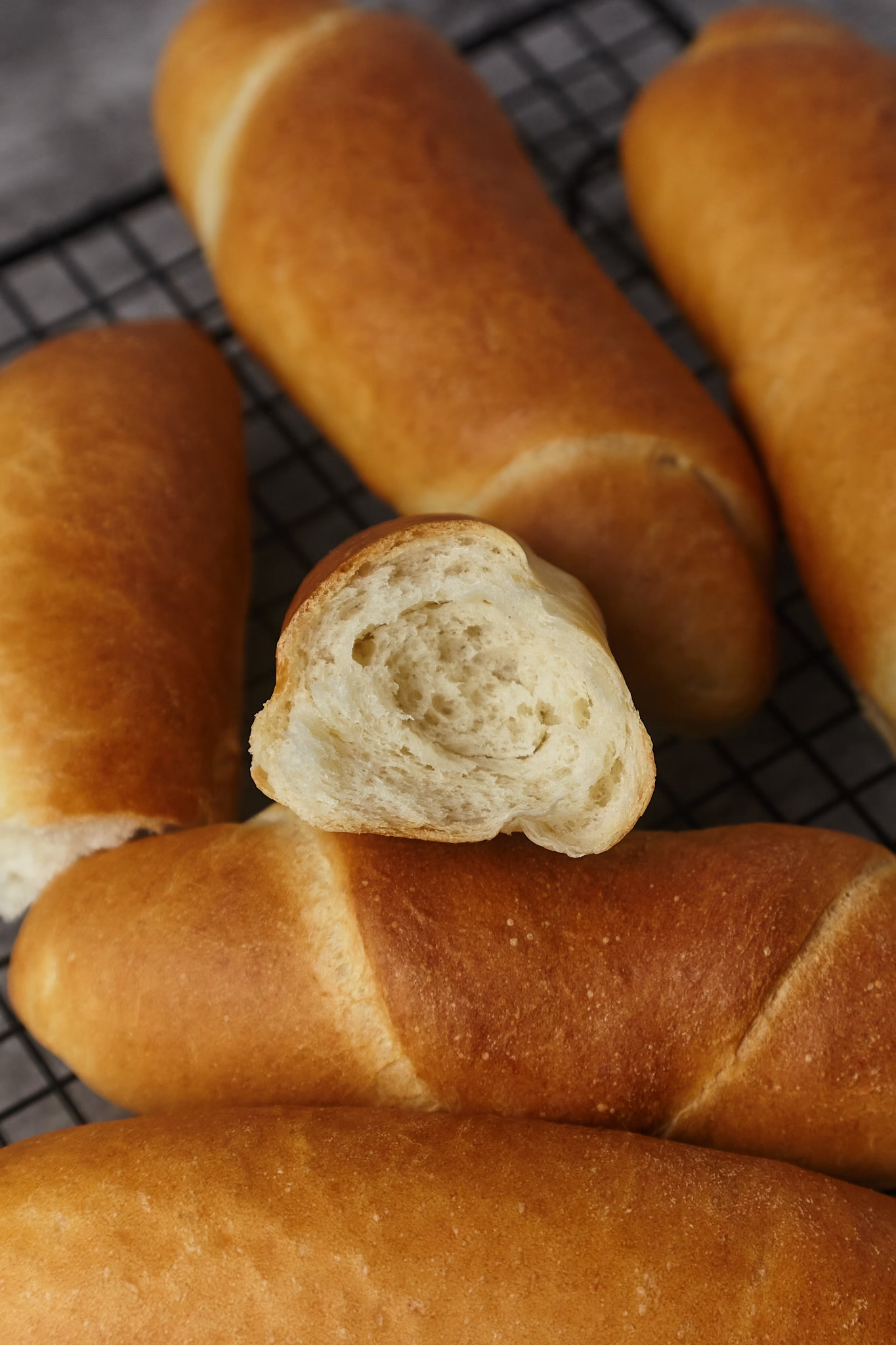
There are some recipes that live far deeper than a written list of ingredients. They’re tied to memory, routine, and identity, and they carry a sense of home no matter where you happen to be. Rohlíky are exactly that kind of recipe for me. Simple Czech bread rolls, lightly crisp on the outside and soft and fluffy within, they are something I always come back to—because they’re familiar, comforting, and deeply rooted in where I come from.
Rohlíky are a staple of Czech bakeries and households. If you’ve ever walked past a bakery in the Czech Republic early in the morning, you’ll know the smell instantly: fresh bread, yeast, and warmth drifting out onto the street. Rohlíky are usually there in baskets by the dozens, bought daily, often still warm, and eaten at every stage of the day. Breakfast, supper, snacks, school lunches—they’re everywhere, and for good reason.
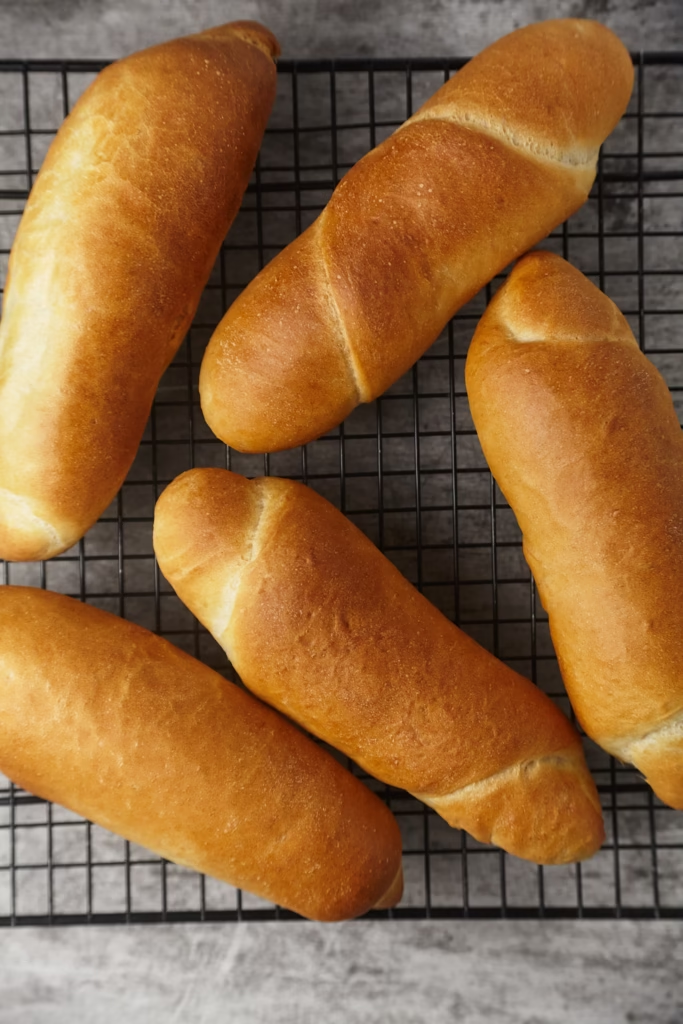
Historically, rohlíky are believed to have evolved from crescent-shaped breads common across Central Europe. Their name comes from the word roh, meaning “horn,” referring to their curved shape. Over time, they became a defining feature of Czech bread culture—less rich than brioche, lighter than dense rye loaves, and perfect for both sweet and savoury fillings. They’re humble, practical, and endlessly versatile.
As a Czech woman, this is one of those recipes that feels almost instinctive. Even if I go a while without making them, the moment I return to it, everything feels familiar again—the dough, the shaping, the anticipation while they bake. It’s a recipe that grounds me. No matter how many new bakes I try or modern recipes I test, rohlíky always pull me back.
These days, there’s another reason they’re a regular in our kitchen: my son absolutely loves Czech-style hotdogs. If you know, you know—no soft brioche buns here. Czech hotdogs are served in rohlíky, with a hole gently pushed through the middle, filled with mustard, ketchup, or both, and then a sausage tucked inside. It’s iconic, and it’s something we make at home often. Making rohlíky from scratch has become part of that ritual, and I love that he’s growing up with this small but meaningful piece of Czech food culture.
What makes rohlíky so special
Rohlíky are simple, but that simplicity is exactly their strength. The crust is lightly crisp, never hard, and the inside is soft, airy, and slightly chewy. They’re not meant to be flashy or rich—they’re meant to be eaten every day.
They work just as well with butter and jam as they do with cheese, ham, or sausages. They’re perfect alongside soup, split open for sandwiches, or eaten plain while still warm from the oven. Few breads are as adaptable, and fewer still feel so familiar.
There’s also something very satisfying about shaping rohlíky. Rolling the dough into triangles and gently curling them into crescents feels almost meditative. It’s a hands-on process that connects you directly to generations of home bakers who have done the same thing long before recipes were written down or shared online.
Tips and tricks for perfect homemade rohlíky
Because rohlíky are simple, small details really matter.
Don’t rush the rise.
A well-risen dough gives rohlíky their light, fluffy interior. Give the yeast time to do its work.
Roll evenly.
Try to keep the dough triangles consistent in size so the rolls bake evenly and look uniform.
Shape gently.
Rohlíky should be rolled snugly but not tightly. Too tight and they won’t expand properly in the oven.
Steam helps.
A little steam in the oven during baking encourages a better crust without making the rolls too hard.
Bake until lightly golden.
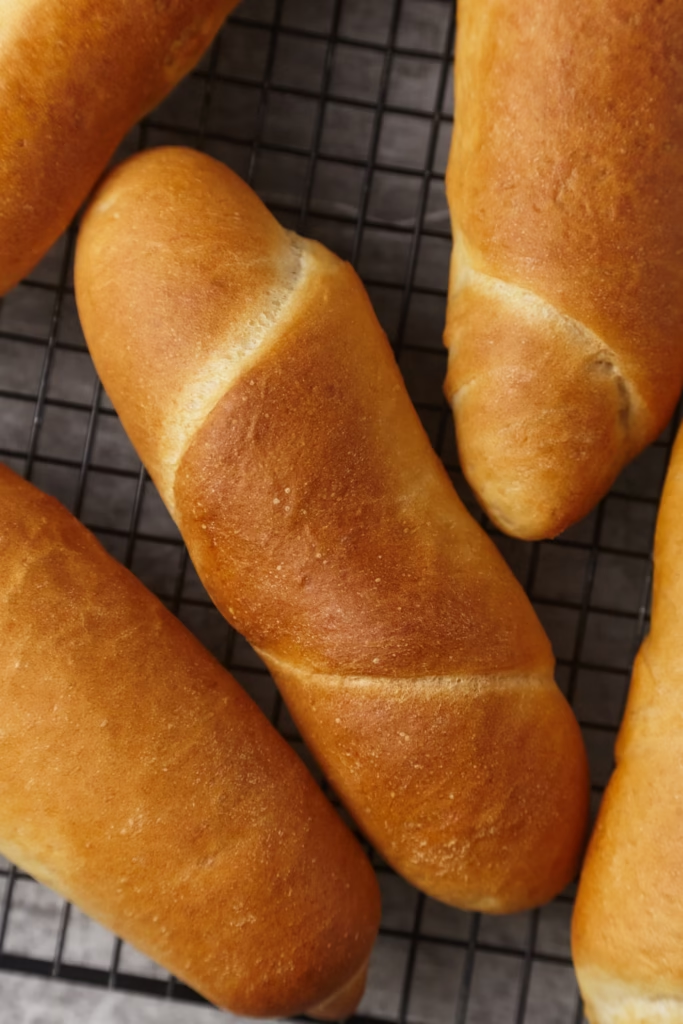
Rohlíky should be pale golden, not deeply browned. Their charm lies in their soft crust and tender crumb.
Let them cool slightly—but not too much.
They’re at their best when still a little warm, especially if you’re serving them fresh.
Commonly asked questions about rohlíky
Are rohlíky the same as croissants?
No. While they share a similar crescent shape, rohlíky are yeast rolls, not laminated with butter. They’re lighter, simpler, and meant for everyday eating.
Can rohlíky be used for sandwiches?
Absolutely. They’re ideal for both open-faced and filled sandwiches, and they hold fillings well without being heavy.
Why do Czech hotdogs use rohlíky instead of buns?
It’s tradition—and practicality. Rohlíky are sturdy enough to hold fillings but soft enough to bite through easily, making them perfect for Czech-style hotdogs.
Do rohlíky keep well?
Like most bread rolls, they’re best eaten fresh. That said, they freeze very well and can be refreshed in the oven.
Can I make them regularly at home?
Yes, and many Czech families do. Once you’re familiar with the dough and shaping, they become second nature.
Why I always return to this recipe
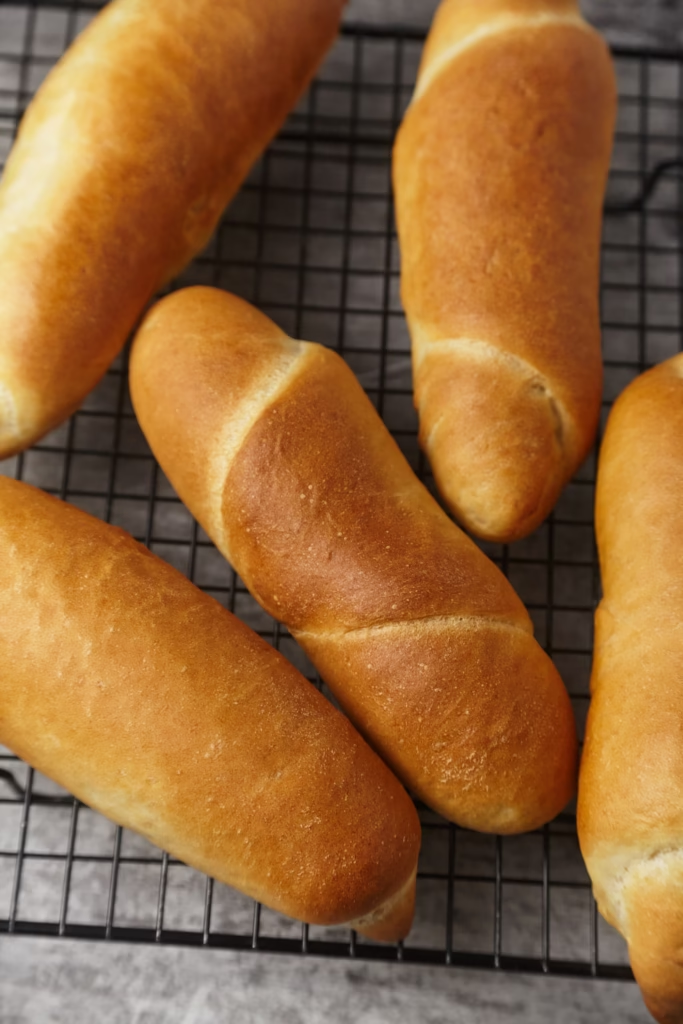
Rohlíky aren’t just bread to me. They’re memory, habit, and heritage all rolled into one. They remind me of bakeries, family kitchens, and the everyday rhythms of Czech life. They connect my past with my present, especially now that I make them for my own son and watch him enjoy them with the same enthusiasm I once did.
In a world of complicated bakes and constant novelty, rohlíky are a reminder that simple food, made often and shared generously, is sometimes the most meaningful of all. And that’s exactly why, no matter how much time passes, I always come back to this recipe.
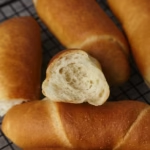
Rohlíky
Equipment
- standing mixer
Ingredients
- 400 g Strong white bread flour
- 10 g white sugar
- 8 g salt
- 7 g dried yeast (1 sachet)
- 30 g oil (or melted, cooled lard)
- 240 g lukewarm water
Instructions
- Add all ingredients into the bowl of your standing mixer and knead with dough hook until you have smooth play dough like dough. It should be soft and elastic. Take it out of the bowl, give it couple of folds and shape into a ball. Return to the bowl, cover with damp cloth or clink film and let prove for 60-90 mins or until double in size.
- Once your dough is ready, knock out the air and separate into 9-10 pieces that have roughly 75g. Roll into small balls and let them rest for couple of minutes. Using rolling pin, roll your balls into little rectangles and then roll into a little snake, starting with the widest side and rolling towards the most narrow end. It is ok if they are thin snakes/rolls as they will puff as they prove and bake. Set them on the tray lined with baking paper. Once all of them are done, cover with damp cloth and let rise for another 30 mins or so.
- Pre-heat your oven to 180-190ºC (depending on your oven). Before adding your rohliky into the oven, spray them with some water and then bake for 12-15 mins until slightly golden brown. Let them cool down on a wire rack to avoid soggy bottoms.


Leave a Reply